
 Dr. Massoume Price: Why We Have Fish For Nowruz?
دکتر معصومه پرایس: چرا در نوروز ماهی داریم؟
http://www.ghandchi.com/dr-massoume-price-why-we-have-fish-for-nowruz.htm
Dr. Massoume Price: Chahar
Shanbe Suri: The Festival of the Last Wednesday
http://www.ghandchi.com/iranscope/Anthology/Norouz/massoumeChrshnbsuri.htm
دکتر معصومه پرایس: جشن بزرگداشت
ارواح رفتگان و نیایش هفت افریده اول
http://www.ghandchi.com/dr-massoume-price-chahar-shanbeh-suri.htm
پی نوشت بیست و یکم اسفند ماه 1397: تا آنجا که این قلم در اینترنت جستجو کرده ام هنوز این مقاله ی خواندنی خانم دکتر معصومه پرایس در ارتباط با ماهی و نوروز به فارسی ترجمه نشده است. س. ق. ساعت و روز تحویل سال نو
P.S. March 12, 2019: As much as I have searched on the Internet, this interesting article of Dr. Massoume Price about the relationship of Nowruz and fish has not been translated to Persian yet. S.G. Nowruz Time and Day
For more articles by Dr. Massoume Price on Nowruz please visit: http://www.cultureofiran.com
Fish as a significant symbolic entity has a long history in Mesopotamia, where
they believed that the earliest civilization was formed by men who came out of
the sea in form of fish. There are also fish-like creatures that often appear as
protectors in mythologies. In Iran, fish as a symbolic creature is documented
from the 8th century BC, in Elam. Currently, there is an object from Susa
(Shush) at the Louvre Museum known as the Spinner. The small object shows a
high-ranking woman seated on a ceremonial stool with lion claws, specific to
divinity or royalty. She is spinning wool, and in front of her there is a food
container showing fish, and behind her there is a standing female attendant
fanning her.
This is not a domestic scene; the woman seated is either a goddess or a high
priestess in a temple, or a royal princess in a palace. The spinning is
ceremonial. High-ranking women used to weave ceremonial luxury cloths that they
dedicated to temples or to their husband king/royals. This scene shows some
sacred act, and that is why it is carved in the first place. The fact that there
is a fish here, means there is some significant symbolism associated with the
scene. At this point, we do not know this symbolism, because the other half of
the object, the part that shows who this female is paying respect to, is
missing. The fact that a goddess, a priestess or a princess is shown indicates
some association with fertility, and even maybe some connection with the
celebration of the New Year, often linked to fertility and procreation.
In the Achaemenid era, 5th century BC, the fish shows up again. Amongst the Oxus
Treasure objects at the British Museum, there is a hollow gold fish with a hole
in its mouth. This has been used for oil or perfume, very likely during some
rituals. Such expensive luxury objects when made were usually associated with
divinity or royalty and had significant symbolism. Again we do not know the
symbolism of fish from this period.
We have more information from the Sasanian era, particularly the 7th century. In
a book called Bundihshn (the Foundation of Creation) we come across the
Zoroastrian Creation Myth of the 7th century. It is here that we have more
information about the fish. Nowruz itself is based on the Zoroastrian Creation
Myth from this period. In the Creation Myth described, Nowruz is the first day
when the cycle of life starts. On the whole this myth describes the first 7
creations, sky, earth, water, first plant, first animal and the first human, and
sun/fire together. The myth also explains the cosmic battle between the good and
evil and names creatures involved. It is a long story, and if one looks closely
at the Haft Sin spread, one will see all the 7 creations (and their protectors;
the 6 Holy Immortals or Amesha Sepanta and Ahura Mazda symbolized by
fire/candle).
In Bundihshn chapter 2, fish represents the last and the 12th constellation
called Mahik (the Fish). Mahik also appears at chapter 14, on the Nature of
Animals, which mentions that fish were created of ten species and names them. In
chapter 27, on the Chieftainship of People and Animals, the Kar-mahi, or Arizh,
(also called Kara-mahi) is the chief of the water-creatures that fights sea
demons in favour of Ahura Mazda (Lord of Wisdom), in the original cosmic battle
against the forces of Ahriman in a mythical ocean.
In short, fish has both celestial and mythical importance being part of the
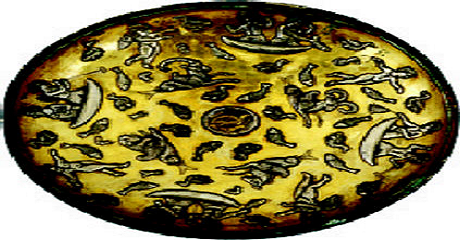
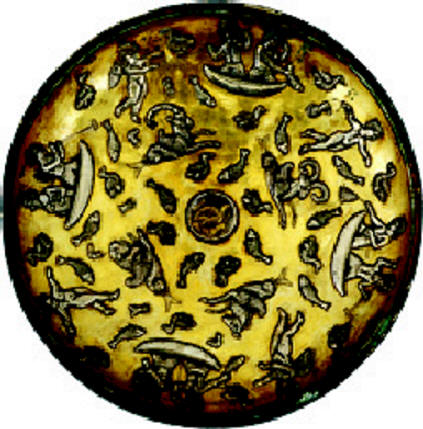
creation myth. There is a plate from the Sasanian era at the National Museum of
Iran that is believed to show a spring/Nowruz scene. We can see the fish here as
well. Also almost all countries that celebrate Nowruz, have a fish-dish for
Nowruz. This certainly is not a coincidence, considering fish has not been the
most common food in most of these countries. The fish-dish is probably a
celebration of Kara-mahi and its role in fighting the demonic forces of Ahriman
and also a symbol of the first animal. The same way other Haft Sin items
symbolize the act of creation and its main elements, plants (flowers and green
shoots), animals (fish), people (egg), water, mirror (sky/heaven), soil in the
potted flowers (earth) and candles (fire/Ahura Mazda).
For more information on Nowruz visit
http://www.cultureofiran.com
Happy Nowruz
Massoume Price
www.cultureofiran.com
www.anahitaproductions.com
Fish-Sasani-Source:National Museum of Iran
Spinner:
https://commons.wikimedia.org/wiki/File:Relief_spinner_Louvre_Sb2834.jpg


Bundahishn: http://www.avesta.org/mp/bundahis.html